- 37:06E38: Preparing for College | Paul Reilly – Academic Advising | Raghavan Rajkumar '27 – Computer S...In this episode of The WPI Podcast, we explore ways that students who are getting ready to start college, at any institution, can manage the transition so they’re prepared to succeed academically. Paul Reilly, assistant dean of student success, and Raghavan Rajkumar, an undergraduate student in computer science and data science and a former summer transition assistant, share practical advice for steps students and their families can take in the summer before college classes begin. This episode also offers specific guidance to incoming WPI students to help them start strong, discussing what the university does to help students prepare for and navigate their first-year. Related links: https://www.wpi.edu/offices/academic-advisinghttps://www.wpi.edu/student-experience/first-year-experience/get-ready/new-student-orientation-events/first-year-welcome-experiencehttps://www.wpi.edu/student-experience/first-year-experience/resources-and-programs/transition-to-college
- 0:18Do You Use WPILib?👍 👍 👍 if you use WPILib
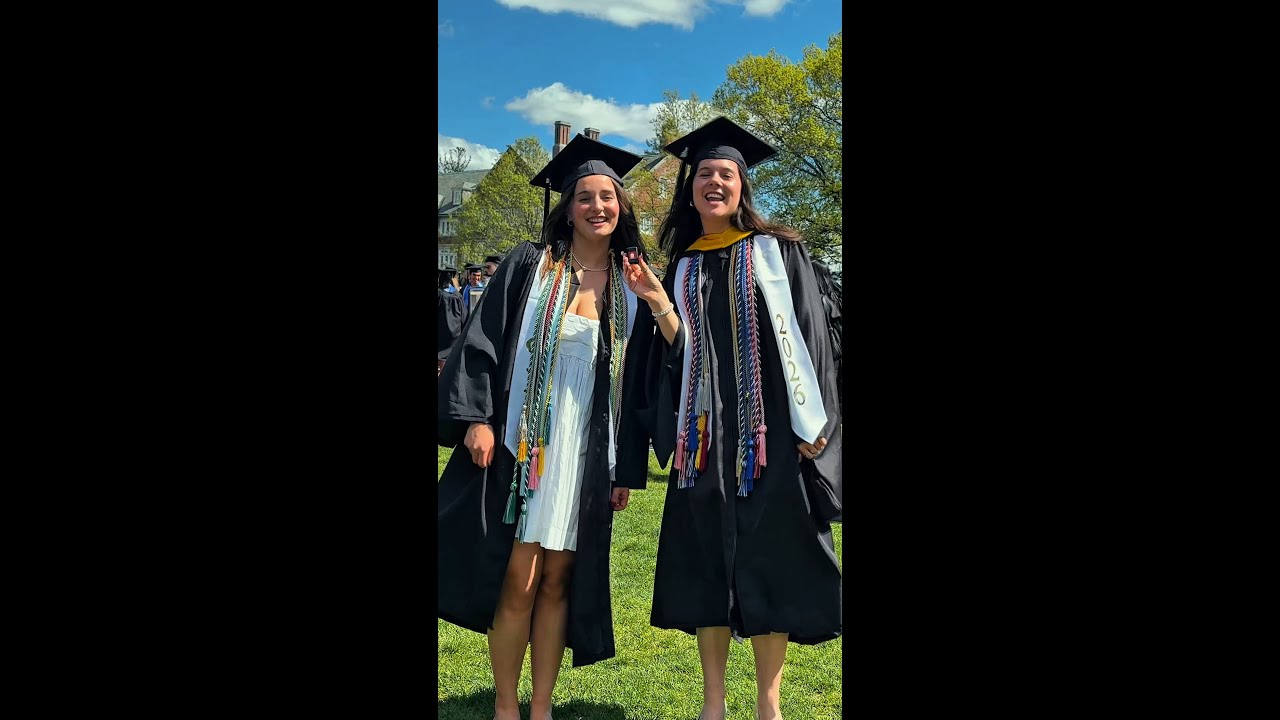
- 0:59Class of 2026's Top Tips for Incoming WPI StudentsThe Class of 2026 has been through it all. And now they're sharing what they wish they knew before stepping onto The Hill. From conquering A-term to making the most of project work, this one's for you, incoming Goats.
- 6:15New CellTech Institute at WPI Expands Workforce Training in Biotechnology and BiomanufacturingA corner laboratory in Goddard Hall is now home to one of Worcester Polytechnic Institute’s (WPI) newest offerings in biotechnology workforce development. The newly launched CellTech Institute, supported by a $731,000 grant from the Massachusetts Life Sciences Center (MLSC), will provide students with hands-on experience using advanced technologies that are shaping the future of biotechnology, pharmaceuticals, and biomedical research. CellTech Institute was officially unveiled during a ribbon-cutting ceremony June 1, 2026 attended by university and MLSC leaders, industry partners, and students. The facility is designed to equip secondary and post-secondary students with practical training incell culture, drug discovery, laboratory automation, and advanced technologies used to study biological systems.The institute’s curriculum was developed to address growing workforce needs acrossthe life sciences sector by preparing students with industry-relevant technical skills while introducing them to emerging tools such as automated laboratory workflows, artificial intelligence-driven data analysis, and modern experimental design.“Life sciences, biomedical engineering, manufacturing, and biotechnology are advancing at an extraordinary pace. As new technologies emerge and therapies become increasingly sophisticated, the need for a highly skilled workforce continues to grow.” said WPI President Grace Wang. “At WPI, we provide highly immersive, experiential education and industry-connected research experiences that prepare students to lead in these rapidly evolving sectors.” “The future of the life sciences industry will be shaped by a highly skilled workforce with experience in the cutting-edge equipment that is driving scientific breakthroughs today,” said MLSC President and CEO Kirk Tayor, MD. “CellTech Institute provides students with valuable hands-on training and direct access to emerging technologies that will help them succeed in a rapidly evolving industry while addressing the growing demand for talent across the Commonwealth’s life sciences ecosystem. We are proud to support WPI’s efforts in preparing the next generation of industry leaders.”CellTech Institute is directed by Robert Dempski, professor of chemistry and biochemistry, who sees the facility as a unique intersection of education, research, and workforce preparation.“It’s a fascinating opportunity to advance workforce development while also supporting education and research,” said Dempski. “The technology in this facility is beyond the leading edge. Integrating life sciences with robotics and automation creates exciting opportunities to accelerate innovation and ultimately advance medicine.”Fellow graduate student Vida Gandahm was equally impressed by the facility and its capabilities. “Wow—with a capital W,” Gandahm said. “I’ve worked in several research labs, and CellTech Institute is incredibly advanced. Anyone working in biotechnology or biomedical research would immediately recognize the sophistication of the equipment and technologies available here.” Among the first students to train in the new laboratory are participants in the NIIMBL eXperience program, an all-expenses-paid summer immersion program that introduces community college and undergraduate students to careers in biomanufacturing and the biopharmaceutical industry. WPI is serving as the Northeast regional host site for this year's program, welcoming a cohort of 15 students from across the country. The National Institute for Innovation in Manufacturing Biopharmaceuticals (NIIMBL) selected WPI in part because of the university’s unique emphasis on robotics and automation within a biomanufacturing environment. “Each NIIMBL site has a different focus,” said Megan Argoe of NIIMBL. “Some programs concentrate on areas like big data, but here at WPI students are learning about robotics in industrial and biomanufacturing settings. None of our other sites is currently doing that. Being able to incorporate the latest approaches being adopted across the industry makes this a particularly exciting experience for students.” By combining advanced laboratory technologies with hands-on, industry-focused learning, CellTech Institute positions WPI at the forefront of biotechnology workforce development while helping prepare the next generation of researchers, technicians, and innovators for careers in one of the nation's fastest-growing sectors.
- 5:17Worcester Polytechnic Institute Appoints Lisa Barton ’87 and John Marczewski ’85 P’23 to Board of...Worcester Polytechnic Institute (WPI) has announced today the election of two new members to its Board of Trustees: Lisa Barton ’87 and John Marczewski ’85, P’23, both distinguished alumni whose careers reflect decades of leadership in complex organizations. Barton and Marczewski will begin their five-year terms on the board on July 1, 2026.“As W.P.I. continues to advance its mission as a global leader in immersive STEM education and research, John and Lisa bring invaluable perspective shaped by technical expertise, executive leadership, and deep industry engagement,” said William Fitzgerald ’83, chair of the W.P.I. Board of Trustees. “Their insight and experience will strengthen the board’s work and support WPI’s continued strategic growth and impact.”Stephen Rusckowski ’79, chair of the nominations and governance committee, added, “Both John and Lisa exemplify the spirit of WPI’s alumni—innovative, service-oriented, and committed to using technology and leadership to address complex challenges. We are honored to welcome them to the board.”Lisa Barton ’87, H ’26, is president and chief executive officer of Alliant Energy Corporation, where she leads enterprise strategy, organizational performance, and long-term growth for a publicly traded company serving customers across the Midwest. She also serves as CEO of Alliant’s two operating subsidiaries. Barton joined Alliant Energy in 2023 after more than 15 years at American Electric Power, where she most recently served as executive vice president and chief operating officer, overseeing large-scale operations and guiding complex organizational initiatives.With more than three decades of leadership experience, Barton is widely recognized for her ability to lead high-performing teams, navigate complex regulatory and stakeholder environments, and drive innovation and cultural alignment within large organizations. She has contributed to numerous industry organizations focused on infrastructure, technology, and policy, and is a respected voice in executive leadership and governance. Barton delivered WPI’s 2026 graduate Commencement address on May 14 and received an honorary degree, reflecting her enduring connection to and support of the university.John Marczewski ’85, P’ 23, is an accomplished executive, engineer, and entrepreneur whose career spans technical leadership, business development, and organizational growth. He is co-founder of Energy Initiatives Group (EIG), which he helped build into a nationally recognized engineering and consulting firm. In 2017, EIG was acquired by EN Engineering (later ENTRUST Solutions Group), where Marczewski served as a vice president and executive consultant, retiring in April 2026. In 2022 Marczewski also joined the board of Sanborn Head and Associates, an engineering and consulting firm based in Bedford, N.H., where he continues to serve as an outside director.Over his career, Marczewski has held leadership and technical roles spanning distribution and substation engineering, systems analysis, grid modernization, renewable energy integration, and executive management. He has led multidisciplinary teams, guided complex projects, and played a key role in scaling professional services organizations. A registered professional engineer in multiple states, he is active in his commitment to mentorship and talent development. Deeply engaged with WPI, he serves as a mentor in the i3 Lab, a member of the Office of Technology Innovation and Entrepreneurship Steering Committee, and a member of the Engineering Advisory Board. He holds a bachelor’s degree in electrical engineering from WPI and a master’s degree from Rensselaer Polytechnic Institute.“We are honored to have John and Lisa join WPI’s esteemed Board of Trustees,” said President Grace Wang. “Their leadership experience, industry insights, and business foresights will enhance our work to ensure our graduates—and WPI—are well positioned to lead in an ever-changing world.”
- 35:05E37: Hurricane Preparedness | Sarah Molinari | Integrative and Global StudiesIn this episode of The WPI Podcast, we explore how communities can better prepare for hurricanes and their long-term effects. Sarah Molinari, assistant teaching professor in the Department of Integrative and Global Studies, discusses lessons learned from damaging storms in modern Caribbean history. The conversation highlights examples of grassroots preparedness and response strategies, the challenges of scaling community-led solutions, and the importance of centering relationships, collaboration, and community voices in research and planning related to storm resilience. As one of several Worcester Polytechnic Institute faculty members in the Caribbean Collaborative Action Network, Molinari conducts research on climate adaptation and collaborates with communities in the region. She discusses this work and her role at the university’s Puerto Rico Project Center advising student projects, which have included the co-creation of a disaster response management tool.Related links:https://link.springer.com/book/10.1007/978-3-032-15727-0https://ccan-upr.org/https://www.wpi.edu/academics/departments/integrative-global-studieshttps://www.wpi.edu/project-based-learning/project-based-education/global-project-program/project-centers/san-juan-puerto-rico-project-center-iqp
- 0:46WPI Commencement 2026They didn’t see it coming. The growth. The friendships. The person they became. 🎓✨Congratulations, Class of 2026. You earned so much more than a degree.
- 40:32Why do some people choose to build others up? A Conversation with Mike Abrams.In this episode of Time to Startup, we sit down with Mike Abrams for a thoughtful conversation about life, opportunity, and the experiences that shape a person’s path. From his time as a student at WPI to the journey that followed, Mike reflects on the decisions, environments, and people that influenced both his career and his perspective on giving back. We talk about the importance of community, the value of opening doors for younger generations, and why supporting students who are willing to take risks and create something of their own matters. Mike also shares what keeps him connected to WPI and why he believes universities can play a powerful role in helping students discover opportunities beyond the classroom. Throughout the episode, the conversation explores themes of courage, gratitude, growth, and impact — not just in business, but in life. This episode is less about startups themselves and more about the people, experiences, and values that inspire others to take bold steps forward.
- 4:06New Worcester Polytechnic Institute Research Could Give Used Electric Vehicle Batteries a Second ...As demand for electric vehicles and energy storage systems accelerates worldwide, researchers at Worcester Polytechnic Institute (WPI) are developing a new approach to lithium-ion battery recycling that could help transform how critical battery materials are recovered, reused, and returned to the manufacturing pipeline.Supported by a $1 million award from the U.S. Department of Energy, the project, led by Professor Yan Wang, William B. Smith Professor of Mechanical and Materials Engineering, will develop a one-step molten salt upcycling process that transforms spent nickel cathodes into high-performance material for next-generation lithium-ion batteries. The approach would reduce the cost, complexity, and energy demands of current battery recycling methods while increasing the value of recovered materials.“Lithium-ion batteries are essential to the future of transportation, renewable energy, and modern technology, but the rapid growth of battery use also creates an urgent need for more sustainable and economically viable recycling solutions,” said Wang. “This project focuses not just on recovering materials, but on upgrading them into higher-performance battery components that can directly support the next generation of electric vehicles.”After battery discharge, shredding. or dismantling, and separation of cathode and anode components, the team’s process converts mixed spent nickel-lean cathode materials into nickel-rich single-crystal cathodes such as NMC622, a necessary component in many of today’s lithium-ion batteries. Nickel oxide, manganese oxide, and cobalt oxide are used as source materials to upgrade blended cathode waste into advanced battery materials with improved capacity and stability compared to conventional commercial materials.Designed to work with both pure and mixed cathode waste, the process eliminates additional sorting and separation requirements. The project also addresses a growing challenge within the battery industry: the mismatch between the materials recovered from older batteries and the newer high-performance materials needed for modern electric vehicle batteries.“This work supports the development of a more circular battery economy,” Wang said. “Instead of treating spent batteries as waste, we are finding ways to convert them into materials that may perform even better than the originals. That has important implications for sustainability, manufacturing resilience, and the future competitiveness of the U.S. battery industry.”The project builds on years of pioneering battery recycling and materials research led by Wang, whose work has focused on developing more sustainable and economically viable solutions for recovering and reusing lithium-ion battery materials. Wang’s research has advanced novel approaches for direct recycling and upcycling of battery waste, helping position WPI as a leader in next-generation battery sustainability and circular manufacturing technologies.
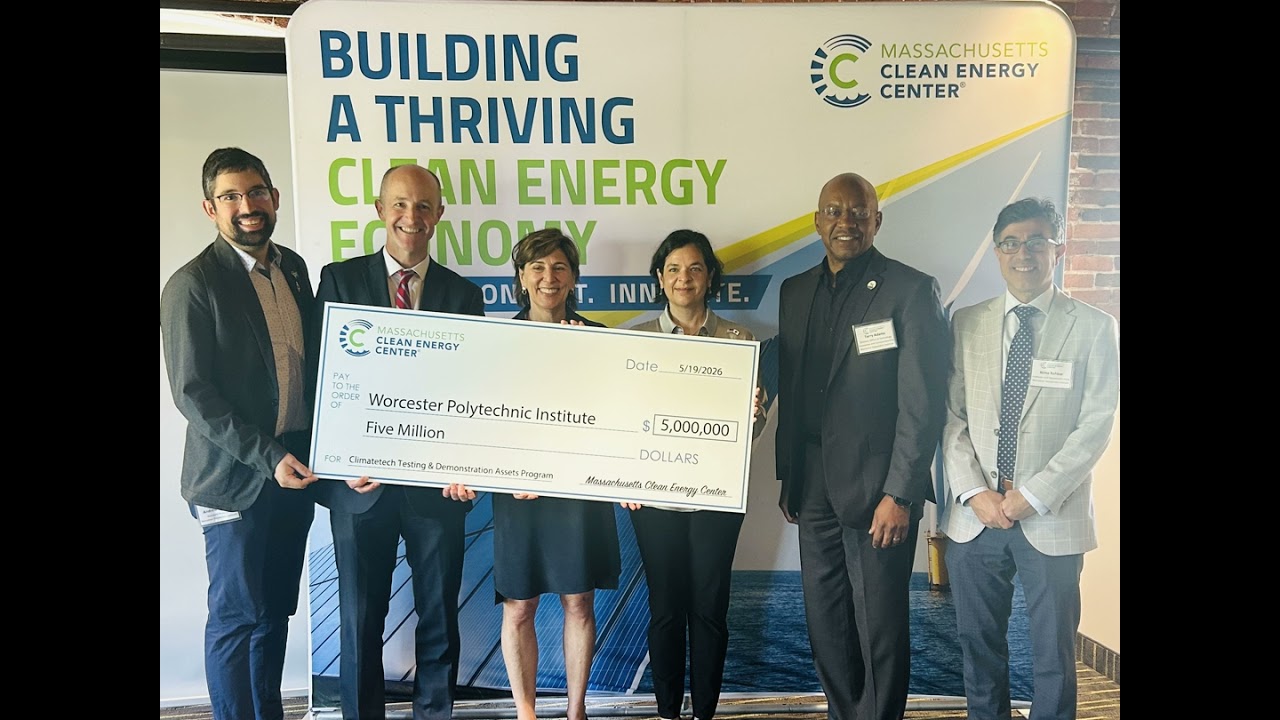
- 5:16WPI Awarded $5 Million to Launch Central Massachusetts Climatetech Hub IncubatorAs part of a major economic and workforce development initiative, state officials announced today that Worcester Polytechnic Institute (WPI) will receive a $5 million award from the Massachusetts Clean Energy Center through its Climatetech Testing and Demonstration Assets Program to establish the Central Massachusetts Climatetech Hub Incubator to accelerate the commercialization of emerging clean energy, materials, and sustainable technologies. “The incubator will serve as a regionally shared, translational platform, where startups can accelerate the path from breakthrough research to real-world deployment—particularly in carbon-negative materials, waste upcycling, and sustainable infrastructure,” said Terry Adams, principal investigator on the project and director of WPI’s Office of Technology Innovation and Entrepreneurship. “Too often, promising discoveries stall between the lab and the market. This initiative is designed to close that gap by providing the resources, partnerships, and structure needed to move innovations into scalable, commercially viable solutions.” The project includes renovating and expanding industrial laboratory space at a WPI-owned building in Worcester. The upgraded facility will colocate startups alongside WPI researchers and core facilities focused on materials durability, additive manufacturing, and circular manufacturing systems. The incubator will support pilot-scale climate tech research and manufacturing activities, providing companies with access to expertise, equipment, and testing capabilities needed to rapidly prototype and refine new technologies. Seven innovation suites will allow multiple startups and research teams to operate simultaneously while sharing analytical laboratories and process-scale instrumentation. “The pace of innovation from our R&D labs is extraordinary. Combined with our region’s industrial roots, strong partnerships, and collaborative ecosystem, it positions us to lead in next-generation circular manufacturing and clean energy with real impact.” said Andrew Teixeira, associate professor of chemical engineering and co-principal investigator on the project. The Central Massachusetts Climatetech Hub is a collaborative group of startup companies, investment firms, academic institutions, and nonprofit organizations whose goal is to expand the region’s commercial activity and workforce through sustainable technologies. The idea of launching an incubator emerged after two years of market research revealed a need for a pilot-scale facility that could meet the specialized technical needs of climate tech innovators. In its first three years, the Central Massachusetts Climatetech Hub Incubator is expected to support startups, facilitate pilot demonstrations aligned with industry best practices, and engage regional companies through collaborative research and workforce training initiatives. Over the next decade, the initiative aims to help attract venture capital and federal funding to the region, support commercialization of market-ready technologies, and create hundreds of high-skill jobs. “Central Massachusetts has a remarkable concentration of expertise in the technologies that will define the next decade of climate progress, such as carbon-negative building materials, bioinspired manufacturing, electrochemical recycling of critical minerals, and resilient infrastructure systems. This incubator gives early-stage ventures the testing infrastructure, mentorship, and partnerships they need to move from promising prototype to commercial product without leaving the region,” said Nima Rahbar, the Ralph H. White Family Distinguished Professor and head of the Department of Civil, Environmental, and Architectural Engineering at WPI and co-principal investigator on the project. In addition to supporting startups and commercialization, the incubator will also serve as a workforce development and training center where students, technicians, entrepreneurs, and industry partners can gain hands-on experience in carbon accounting, circular manufacturing, and pilot-scale climate tech operations. The initiative further positions WPI as a growing center for climate tech research, advanced manufacturing, and innovation-driven economic development in Central Massachusetts while expanding the region’s role in the state’s evolving climate technology ecosystem.


Videos

Navigation sectionMessage CenterLocation and PersonaSettings