- 31:17E40: A Parent Playbook for College | Emily Perlow, Vice President of Student Affairs/Dean of Stud...Sending a student to college is an exciting milestone, but it also comes with plenty of questions. How involved should parents be? When should they step in, and when should they step back? In this episode, WPI's Dean of Students shares practical advice on supporting college students through academic challenges, independence, well-being, and everything in between. Whether you're preparing for move-in day or navigating the college years, you'll come away with tips to help you and your student embrace these evolving roles.
- 4:10WPI Launches Research Collaborations with Tennessee State UniversityResearchers at Worcester Polytechnic Institute and Tennessee State University will launch early-stage, interdisciplinary research projects with support from new “seed” grants funded by John T. Mollen, WPI trustee emeritus.The Worcester Polytechnic Institute–Tennessee State University Collaborative Seed Funding Program will provide $20,000 each to four teams composed of WPI and TSU researchers. The teams will use the one-year grants to develop plans for joint research initiatives that could potentially attract government or industry funding.“We are grateful to Jack Mollen for his generous gift, which will enable collaborations between two universities with complementary research strengths and expertise,” says Bogdan Vernescu, WPI vice president and vice provost for research and innovation. “The seed funding will support researchers during the early stages of their work to develop innovative projects with the potential to address important scientific and technological problems.”Mollen served as a WPI trustee from 2007 to 2022 and received an honorary degree from the university in 2023. He was chairman of the WPI Board of Trustees from 2016 to 2021 and again briefly in 2022.“Research collaborations between institutions have the power to tap expertise that may not exist at a single institution,” Mollen says. “I hope WPI and TSU researchers will build long-lasting ties that will benefit both institutions and lead to innovative breakthroughs.”TSU, one of the country’s historically Black colleges and universities, is a public, land-grant university located in Nashville, Tenn. TSU is home to a range of research in science, technology, agriculture, engineering, and mathematics fields.“This seed-grant partnership between our institutions strengthens and expands the research collaboration between Worcester Polytechnic Institute and Tennessee State University, and it enables our institutions to advance critical technology and innovation priorities of national importance,” says Quincy Quick, TSU chief research officer and associate vice president for research and sponsored programs. “Led by TSU researchers in the colleges of Engineering and Agriculture, cornerstones of the university’s research enterprise, this initiative aligns with the state of Tennessee’s strategic investments in artificial intelligence and innovation. WPI investigators bring unparalleled expertise that complements TSU’s strengths, creating a highly synergistic partnership. Beyond the immediate objectives of this seed grant, the collaboration establishes a strong foundation for pursuing significantly larger, externally funded research initiatives while enhancing the research capacity of both institutions to make meaningful contributions in applied artificial intelligence, quantum computing, robotics, and other emerging technologies.”Grant funding will be divided equally between WPI and TSU researchers. The four projects will focus on food safety, agriculture, quantum sensing, and sustainable buildings.
- 5:22How Project-Based Learning Might Help Higher Ed Weather the StormsIt’s no secret that higher education is facing multiple headwinds these days. What isn’t as widely reported, though, is that project-based learning—the active learning approach that’s at the core of WPI’s curriculum—can offer some protection from those headwinds. Last month WPI convened about 70 college and university faculty and administrators to strategize innovative, yet realistic, ways to harness project-based learning (PBL) to ensure that higher education not only remains relevant for students but also prepares them to succeed in an increasingly unpredictable career landscape. “The proof, we like to say at WPI, is in the projects,” said WPI President Grace Wang. “We know that a project-based curriculum challenges students the right way, with complex, real-world problems. They work in teams. They ask questions. They test ideas. They adjust when the path is unclear. They learn to lead and to listen. They grow through adversity as well as success. The result is a degree with enduring value—and graduates who enter the workforce ready to contribute with confidence for the full length of their careers.” The two-day Symposium on Project-Based Learning included panel discussions, workshops, and plenary sessions featuring WPI faculty and alumni as well as faculty from other colleges and universities and staff from national education organizations, including the American Association of Colleges and Universities (AAC&U) and the Lumina Foundation, an independent organization focused on strengthening the effectiveness of higher education. Speakers and participants shared multiple perspectives on how PBL can be leveraged today to prepare students for tomorrow’s jobs in a rapidly changing AI-driven economy. Presenters also noted that a college degree obtained through project-based learning provides real value. “Knowledge isn’t enough anymore. Students need to show what they know how to do,” said Mara Woody, director of strategic partnerships at Riipen, a company that connects students with experiential learning opportunities. While moderating a panel about AI, higher education, and PBL, Woody said that when colleges and universities give students hands-on opportunities to think creatively to help solve real-world problems, students gain skills that they will remember—and use—long after the course is over. “We’re preparing students to thrive in their communities and to help their communities thrive.” Keynote speaker Matt Sigelman, president of the workforce research organization Burning Glass Institute, in a talk titled “The Future of Work and Learning in the Age of AI,” encouraged the audience to learn from the past with an eye toward the future. He pointed out that, in hindsight, many of the seemingly fantastical claims made at the dawn of the internet era underestimated that technology’s impact. We are already seeing AI’s effect on the economy in ways few considered only a couple years ago, and as the pace of that change accelerates, Sigelman said, everyone in the labor force will need to be adept at learning new skills and reframing their experiences. This means that work-based learning in college settings is more valuable than ever.Leading in theory and practice On the heels of the Symposium, WPI’s Center for Project-Based Learning hosted its 12th annual Institute on Project-Based Learning, a hands-on opportunity for higher education faculty and staff to work with WPI coaches to create or advance project-based learning programs at their home institutions. This year more than 80 people attended the Institute, marking the highest attendance since before COVID-19. Participants came from a wide range of institutions, including public and private; liberal arts and technical; and community colleges, teaching-focused campuses, and research-centric schools, highlighting the many ways that projects can be incorporated into higher education. “To host these two events back-to-back certainly reaffirmed my sense that project-based learning is being valued more and more by the higher education community,” said Kris Wobbe, director of the Center for Project-Based Learning and interim dean of The Global School. “We are delighted to support the growth of this movement and hope that the two events provided valuable insights and connections to the participants.”
- 0:33Why Top Employers Keep Coming Back to WPI | Real Recruiter PerspectivesThe proof is in the projects.When recruiters are asked what sets WPI students apart, the answers are consistent: technical depth, an interdisciplinary approach to problem solving, and the ability to work collaboratively under real-world conditions.That's not a coincidence. It's the WPI model — and employers notice.
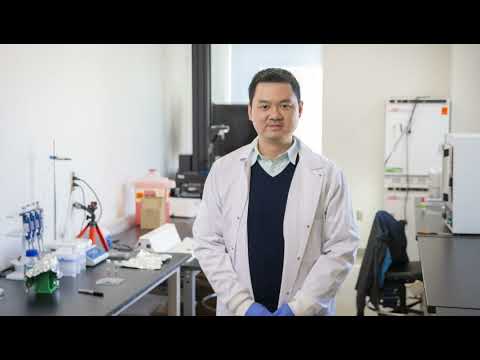
- 4:10Researchers Develop System to Customize Hydrogel ImplantsResearchers led by Worcester Polytechnic Institute Assistant Professor Jiawei Yang have designed a modular system that could potentially improve hydrogel implants in the body by customizing the materials for stiffness and functionality. The system, described in the peer-reviewed journal Science Advances, uses coatings to treat the surface of hydrogels, which are flexible, water-loaded polymers. The researchers reported that by customizing different types of hydrogels with unique coatings, they were able to create two distinct hydrogel implants that maintained adhesion in living tissue and resisted an immune system response. “It is difficult for a material with a single chemical composition to play two distinct roles in an implant,” says Yang, a faculty member in the WPI Department of Mechanical and Materials Engineering. “We addressed that by developing a way to customize hydrogel implants with two sets of chemical compositions that can be tailored to address specific needs and achieve better results.” The research addresses two critical challenges in the design of hydrogel implants—functionality and immune rejection. In the body, hydrogel implants need to adhere to tissues that may have different levels of stiffness, ranging from soft tissues in the brain to stiffer tissues in muscles and cartilage. Hydrogel implants also need to function, perhaps by delivering medicine to tissue or holding a device in place. Increasing the stiffness of a hydrogel implant to meet the needs of stiffer tissues, however, can alert the immune system to a foreign body. One particularly challenging immune system response is fibrosis, in which the body produces collagen to encapsulate an implant with a thick, dense covering. Once encapsulated, an implant can stop functioning. To address the challenges in hydrogel implant design, the researchers grafted two types of ultrathin polymer coatings, ranging from a few nanometers to a few micrometers thick, onto two hydrogels with different structures. Then they tested the materials for adhesion, fibrosis, and stiffness. Yang says that the modular system allowed researchers to overcome the traditional trade-off between stiffness and functionality in implant design. The underlying hydrogels could be adjusted to meet stiffness needs, while the coatings could be adjusted to make sure the implant could continue to function in living tissue without triggering an immune response. The thickness of coatings proved to be a critical factor in design, Yang says. “By dialing up the thickness of coatings to micrometers, we strengthened adhesion,” he says. “When we dialed down the thickness to nanometers, we saw no fibrosis.” The research concentrated on work Yang mostly did while he was a research fellow at Massachusetts Institute of Technology and Boston Children’s Hospital. To characterize the materials that were created, Yang used photonics resources at WPI’s Lab for Education and Application Prototypes (LEAP). Yang, who focuses his research on innovating polymer materials for health and sustainability, joined the WPI faculty in 2024. He received a CAREER Award in 2025 to support work on developing hydrogel bioadhesives for long-term implantation.
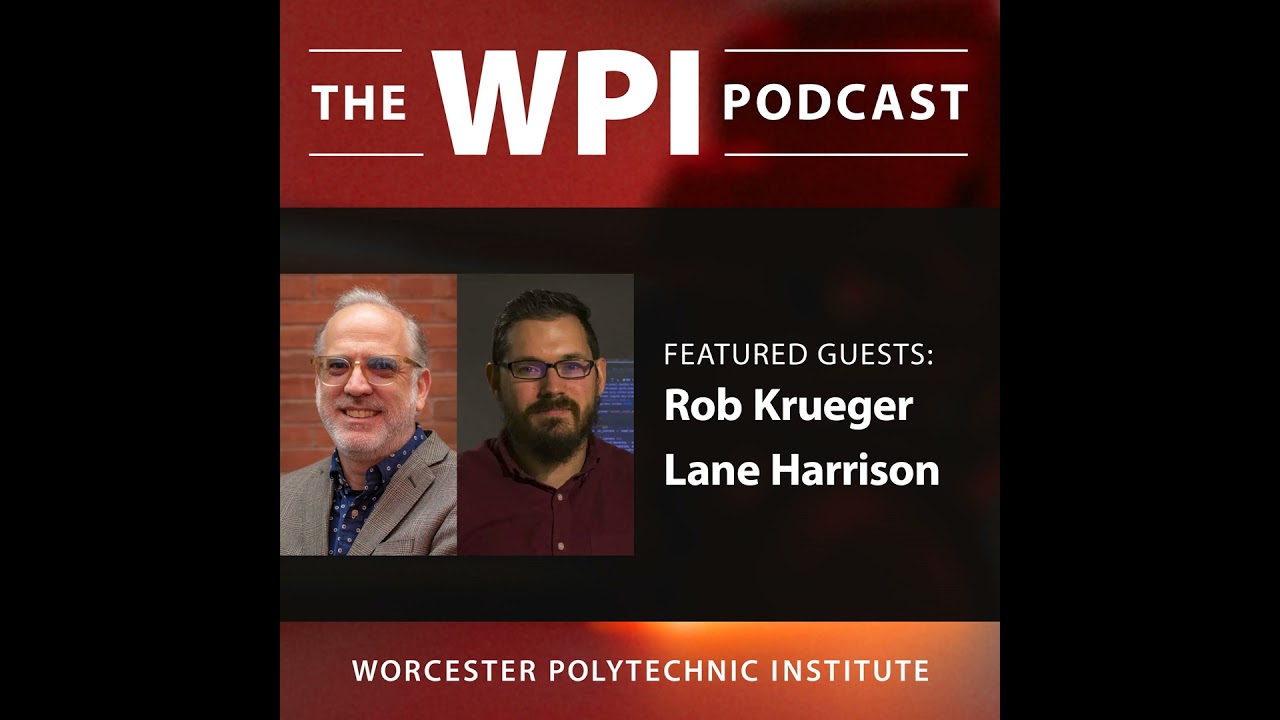
- 35:21E39: The AI Connector: Social and Data Sciences | Rob Krueger-Social Science and Policy Studies |...Can artificial intelligence help create better public policy and stronger communities? In this episode, WPI professors Rob Krueger and Lane Harrison discuss how AI is transforming social science research and providing policymakers with new tools to better understand complex societal challenges. The conversation also explores Poverty Stoplight, an innovative initiative that empowers families to assess their own circumstances across areas such as income, housing, health, and education using a simple red, yellow, and green framework. Learn how AI and community-driven data can work together to inform decision-making, elevate lived experiences, and help drive meaningful social change.
- 4:23WPI Welcomes More Than 5,000 Attendees During Three Consecutive Weekends of Robotics CompetitionsFor three consecutive weekends this spring, Worcester Polytechnic Institute transformed into a global hub for robotics, innovation, and STEM education as thousands of students, mentors, volunteers, families, and industry leaders gathered on campus for BattleCry 26, and the WPI Annual FIRST LEGO League Event (WAFFLE).Together, the events welcomed more than 5,000 attendees to campus and showcased WPI's longstanding commitment to hands-on learning, robotics education, and its partnership with FIRST.The first two weekends featured BattleCry, May 29 and 30 and June 6 and 7, one of the longest-running offseason FIRST Robotics Competition events in the world. More than 90 high school robotics teams came to WPI to continue their engineering journey after the official competition season, testing robot improvements, mentoring new students, and celebrating the community that has defined the program for decades.The third weekend, June 11– 14, brought WAFFLE, WPI's international FIRST LEGO League championship-style event. The competition welcomed 108 teams representing more than 20 countries and 30 U.S. states. More than 2,500 students, coaches, and family members participated in the four-day event.During WAFFLE's opening ceremony, WPI President Grace Wang welcomed participants from around the world and highlighted the importance of making STEM education engaging and accessible for all students."Together with FIRST, we believe that science, engineering, and technology education should not be hard. It should be fun. It should be accessible," Wang said.She encouraged students to continue pursuing their curiosity and passion for discovery."Keep exploring, keep experimenting, and keep learning," Wang told the audience.Chris Rake, Chief Operating Officer of FIRST, also addressed participants and celebrated the global community gathered at WPI."What an incredible gathering of some very, very talented people," Rake said.Reflecting on the collective impact of students, educators, volunteers, and supporters, he added:"The reality is, we all believe in what's happening in this room, and that's why we're all here today."The events were coordinated by WPI's Robotics Resource Center, alongside hundreds of volunteers from WPI and the broader FIRST community, including WPI students and alumni who returned to campus to volunteer at all three events, serving as judges, referees, technical advisors, and mentors. Their participation reflects the deep connection between WPI and FIRST, a relationship that spans more than three decades.Beyond the competitions themselves, students explored the campus, participated in cultural exchanges, formed new friendships, and experienced firsthand how engineering and technology can bring people together across geographic and cultural boundaries.As the final robots powered down and teams began their journeys home, the impact of the three-week celebration was clear: robotics is more than a competition. It is a community that inspires young people to turn knowledge into action, tackle real-world challenges, and imagine a better future.For WPI, the events represent an ongoing commitment to STEM education and to creating opportunities for students from around the world to discover that they belong in science, technology, engineering, and mathematics.
- 3:41WPI SailBot Team Captures Record-Breaking Fifth International ChampionshipWorcester Polytechnic Institute’s (WPI) SailBot team captured first place at the 18th Annual International Robotic Sailing Regatta, hosted June 7–12 by Cornell University in Ithaca, N.Y. The victory marks WPI’s fifth championship in the competition, making it the winningest program in regatta history.The annual regatta challenges teams to design autonomous sailboats capable of completing navigation, racing, and search-and-rescue tasks with minimal human intervention. W.P.I. dominated the competition with first-place finishes in five of seven events, plus a second- and third-place finish.This year’s SailBot team included recent graduates Arshia Balaji (mechanical engineering/robotics engineering), Benjamin Laster (robotics engineering), Bolong Li (robotics engineering), Brianna Meisser (robotics engineering), Henry Pharris (robotics engineering), and Steven Vovcsko (mechanical engineering/robotics engineering). The crew delivered a standout performance after redesigning several key subsystems, including the control application, trim-tab mechanism, vision system, mast damper, rudder, and keel. The team also streamlined operations and enhanced documentation to support future SailBot researchers and competitors.“This accomplishment reflects the strength of our collaboration, where each team member contributed their part and supported one another throughout the process,” said Laster.“This year’s results reflect an exceptional level of engineering and systems integration,” said Ken Stafford, emeritus teaching professor of robotics engineering, who advised the team alongside William Michalson, professor of robotics engineering. “The team demonstrated that success in autonomous sailing depends on far more than speed. Their ability to perceive, reason, and adapt in a dynamic environment set them apart from the field.”The SailBot program is a long-running Major Qualifying Project (MQP) at WPI focused on the design, development, and operation of a fully autonomous sailboat. Each year, students build upon the work of previous teams while advancing research in robotic sailing and autonomous navigation.Since its founding in 2006, the SailBot competition has attracted teams from universities, colleges, and high schools across North America, Europe, and South America. The regatta serves as a proving ground for autonomous maritime technologies while providing students with hands-on experience solving real-world engineering challenges in highly variable environments.For WPI, the championship title illustrates the university’s distinctive approach to immersive project-based learning, where students apply classroom knowledge to complex, multidisciplinary problems.
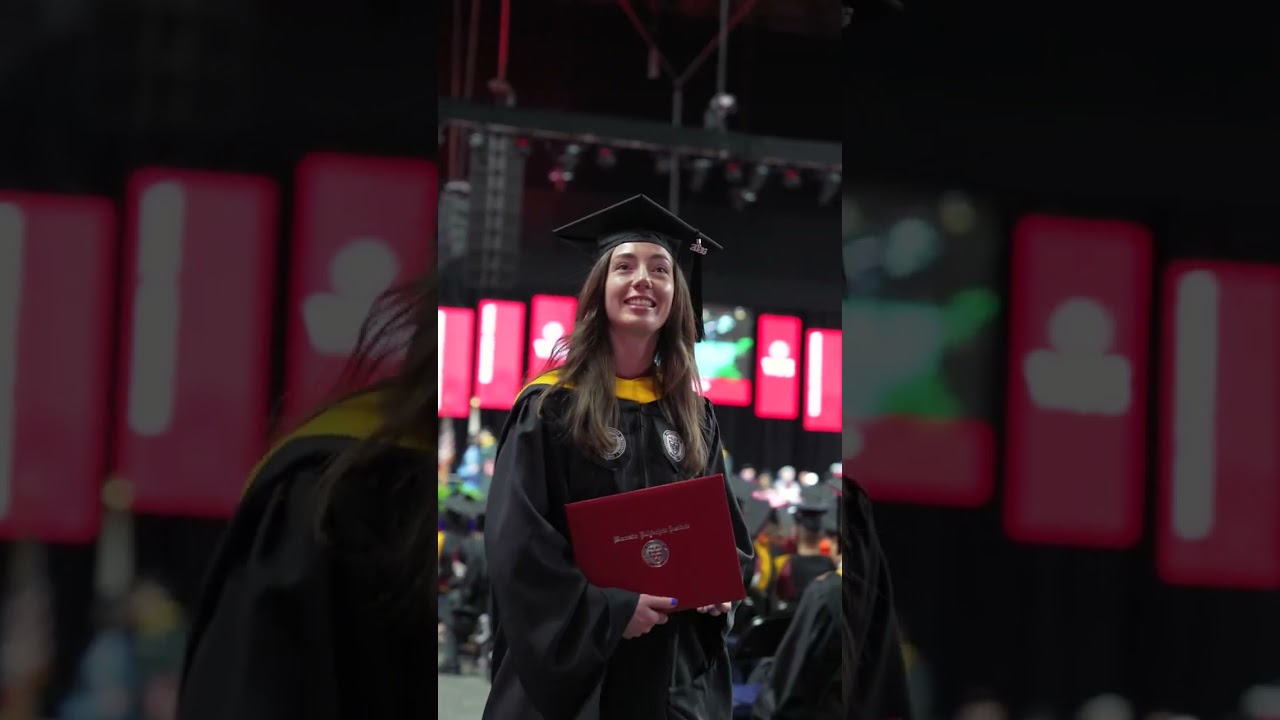
- 0:41Look Back at Commencement 2026One month ago, nearly 1,200 undergraduates, 600+ master’s graduates, and 60+ doctoral graduates walked across the stage at WPI’s 157th Commencement. The charge they were given: pick a problem, solve it. That solution is an industry.We can’t wait to see what our graduates build.
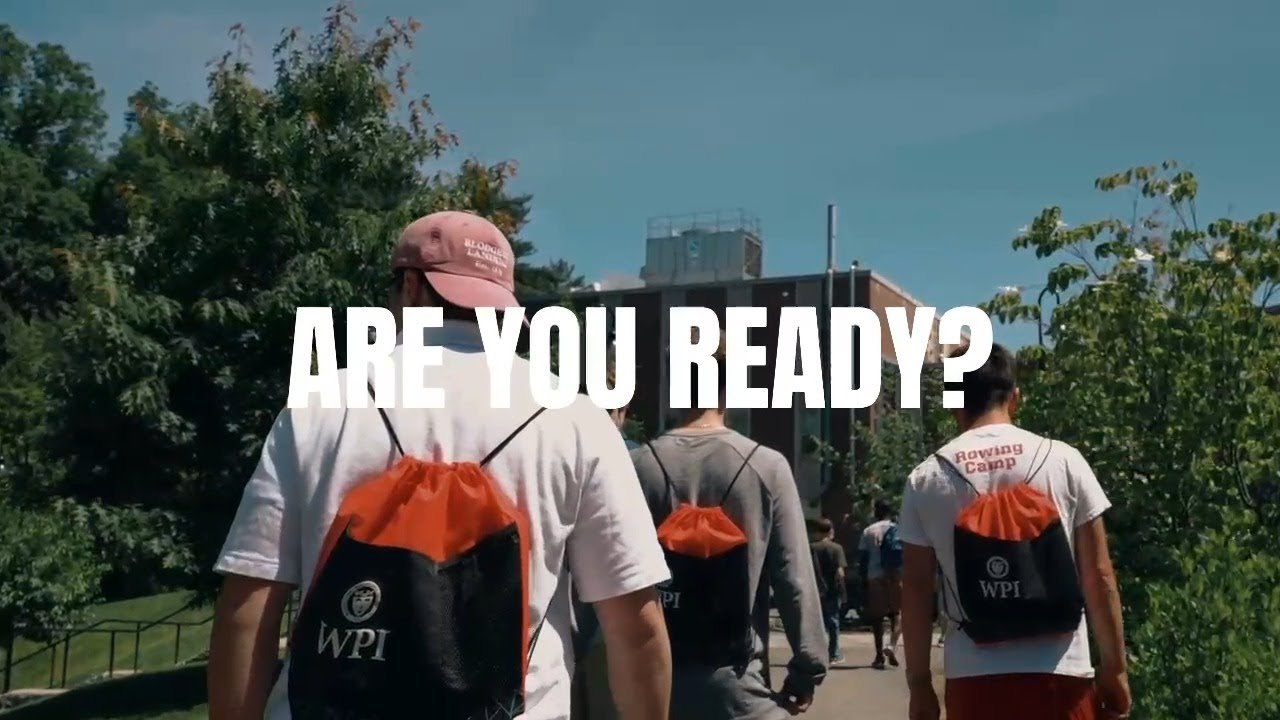
- 0:17Are You Ready for First-Year Welcome Experience?The Student Transition Assistants have been putting in the WORK. The early mornings. The heavy lifting. The rigorous preparation. All for one reason... YOU, Class of 2030. 🔴 WPI's First-Year Welcome Experience is here and our STAs are more than ready to make your day unforgettable.


Videos

Navigation sectionMessage CenterLocation and PersonaSettings